
Faculty and Postdoctoral Associates
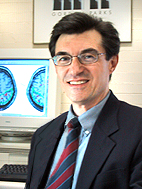 |
Marcel Just Ph.D.D.O. Hebb Professor of Psychology and the Center's Director. He received his Ph.D. from Stanford in 1972. His current research uses fMRI studies to provide key information about the cortical organization underlying various high-level cognitive processes. This information is used for developing a comprehensive theory of cognition, expressed as the 4CAPS computational theory that links cognition to brain activation. The content areas of the studies include language, visual thinking, automaticity in complex tasks, and autism. He is also the Director of the Scientific Imaging and Brain Research (SIBR) Center.  Selected Publications: CCBI publications list Selected Publications: CCBI publications list
Just, M. A., Cherkassky, V. L., Keller, T. A., Kana, R. K., & Minshew, N. J. (in press). Functional and anatomical cortical underconnectivity in autism: Evidence from an fMRI study of an executive function task and corpus callosum morphometry. Cerebral Cortex.
Just, M. A., Cherkassky, V. L., Keller, T. A., & Minshew, N. J. (2004). Cortical activation and synchronization during sentence comprehension in high-functioning autism: Evidence of underconnectivity. Brain, 127, 1811-1821. Just, M. A., Newman, S. D., Keller, T. A., McEleney, A., & Carpenter, P. A. (2004). Imagery in sentence comprehension: An fMRI study. NeuroImage, 21, 112-124. Just, M. A., Carpenter, P. A., Keller, T. A., Emery, L., Zajac, H., & Thulborn, K. R. (2001). Interdependence of non-overlapping cortical systems in dual cognitive tasks. NeuroImage, 14, 417-426. |
 | |
 |
Kai-min Changcompleted his Ph.D. training in the Language Technologies Institute and the Center for the Neural Basis of Cognition. He is now a research associate at the Language Technologies Institute. He is interested in applying mathematical methodologies and machine learning techniques to investigate and model various human cognitive processes, such as knowledge representation and language processing. Kai-min received a B. Math in Computer Science and Psychology from University of Waterloo, Canada.  Email
kaimin.chang@gmail.com Email
kaimin.chang@gmail.com
 Investigator's Homepage:
http://www.cs.cmu.edu/~kkchang
Investigator's Homepage:
http://www.cs.cmu.edu/~kkchang
|
| |
 |
John Hale, Ph.D.is visiting the CCBI this year, on leave from Cornell University. At the CCBI, he is studying the relationship between sentences and brain images. His broader research interests include cognitive modeling and natural language. Email
jthale@cornell.edu
|
| |
 |
Tim Keller, Ph.D.is a Senior Research Associate with expertise in fMRI. He is working on all of the fMRI projects. He has just the right computational skills to deal with the intensive data processing associated with fMRI data, as well as neuroanatomical knowledge for data interpretation. His substantive interests are in working memory, language, and spatial thinking. His Ph.D. is from the University of Missouri. He was previously an NIMH Post-Doctoral Fellow for two years. Email
tk37@andrew.cmu.edu
Selected Publications:
CCBI publications list
Keller, T. A., Kana, R. K., & Just, M. A. (in press). A developmental study of the structural integrity of white matter in autism. NeuroReport.
Just, M. A., Cherkassky, V. L., Keller, T. A., Minshew, N. J. (2004). Cortical activation and synchronization during sentence comprehension in high-functioning autism: Evidence of underconnectivity. Brain, 127, 1811-1821. Just, M. A., Newman, S. D., Keller, T. A., McEleney, A., & Carpenter, P. A. (2004). Imagery in sentence comprehension: An fMRI study. NeuroImage, 21, 112-124. Keller, T. A., Carpenter, P. A., & Just, M. A. (2003). Brain imaging of tongue-twister sentence comprehension: Twisting the tongue and the brain. Brain and Language, 84, 189-203. |
| |
 |
Robert Mason, Ph.D.is a Senior Research Associate. His current research explores the cognitive and neural mechanisms through which scientific concepts are learned. He also developed a multiple cortical network theory of discourse processing with colleagues at the Center for Cognitive Brain Imaging (CCBI). His broader research program focuses on the interaction of learning, language and the brain during the instructional process. He uses functional Magnetic Resonance Imaging (fMRI) and repetitive Transcranial Magnetic Stimulation (rTMS) to study cortical networks that subserve reading and learning. He has studied these networks in English speakers, bilinguals and individuals with autism. His Ph.D. is from the University of Massachusetts at Amherst and he previously worked at the Learning Research & Development Center at the University of Pittsburgh. . Email
rmason@andrew.cmu.edu
Selected Publications:
CCBI publications list
|
| |
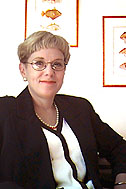 |
Nancy J. Minshew, Ph.D.Professor of Psychiatry and Neurology at the University of Pittsburgh School of Medicine, is a research neurologist who has developed a theory of cognitive and neural deficits in autism. Her research, conducted in collaboration with her extensive research team, has completed large-scale neuropsychologic studies, eye movement and posturography studies, structural MRI, and MRS (magnetic resonance spectroscopy) of high functioning autistic individuals. This research has resulted in the definition of deficits in complex cognitive abilities across domains with the exception of the visuospatial domain and evidence of neocortical systems as the primary site of CNS dysfunction in autism. Email
minshewnj@msx.upmc.edu
Investigator's Homepage:
http://www.wpic.pitt.edu/research/CeFAR/
Minshew, N.J., Luna, B., & Sweeney, J.A. (1999). Oculomotor evidence for neocortical systems but not cerebellar dysfunction in autism. Neurology, 52, 917-922.
Minshew, N.J., & Goldstein, G. (1998). Autism as a disorder of complex information processing. Mental Retardation and Developmental Disabilities Research Reviews, 4, 129-136. Minshew, N.J., Goldstein, G., Siegel, D.J (1997) Neuropsychologic functioning in autism: Profile of a complex information processing disorder. Journal of the International Neuropsychological Society, 3, 303-316. |
| |
 |
Tom Mitchell, Ph.D.Professor in the Department of Computer Science and Director of the Center for Automated Learning and Discovery (CALD). One of the leading figures in machine learning, his research employs various statistical and analytic methods in an effort to construct computer programs (algorithms) that learn from experience. His work with the CCBI conjoins machine learning with neuroimaging to help form theories of brain function, using classifiers to find stimulus unique patterns of brain activation. In essence, the machine learning algorithms are being trained to detect cognitive states. He also directs CALD, an interdisciplinary center whose mission is to invent new methods for using historical data to improve future decision Email
tom.mitchell@cmu.edu
|
| |
 |
Diane Williams, Ph.D.is an Assistant Professor at Duquesne University, working on behavioral and fMRI studies of cognitive and linguistic processing in individuals with autism under the mentorship of Dr. Just. She has a Research Career Development Award from the National Institute of Deafness and Other Communication Disorders. Dr. Williams completed her doctoral work at Bowling Green State University in Ohio in Speech-Language Pathology. She was a postdoctoral fellow with Dr. Nancy Minshew, Director of the Collaborative Program of Excellence in Autism at the University of Pittsburgh, and continues to collaborate with Dr. Minshew on a number of studies with high-functioning adolescents and adults with autism. Dr. Williams has more than 20 years of clinical experience with individuals with autism. Email
williamsdl@upmc.edu
Selected Publications:
Minshew, N.J., & Williams, D.L. (in press). The new neurobiology of autism: Cortex, connectivity, and neuronal organization. Archives of Neurology..
Williams, D.L., Goldstein G., Minshew N.J. (2006). Neuropsychologic functioning in children with autism: Further evidence of disordered complex information processing. Child Neuropsychology, 12, 279-298. Williams, D.L., Goldstein G., Minshew N.J. (2006). Profile of memory function in children with autism. Neuropsychology, 20, 21-29. Williams, D.L., Goldstein G., Carpenter, P.A, Minshew N.J. (2005). Verbal and spatial working memory in autism. Journal of Autism and Developmental Disorders. Williams, D.L., Goldstein G., & Minshew N.J. (2005). Impaired memory for faces and social scenes in autism: Clinical implications of the memory disorder. Archives of Clinical Neuropsychology, 20, 1-15. |
| |
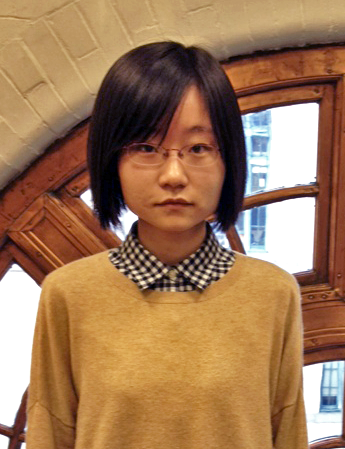 |
Jing Wang, Ph.D.is a CCBI postdoctoral associate. Her primary research interests are in the brain basis of conceptual representation, and the application of multivariate methods to neuroimaging and eye movement data. Her current work uses fMRI and machine learning methods to investigate the knowledge representation in various semantic contexts. Jing got her PhD from the University of South Carolina. Email
jiwang1@andrew.cmu.edu
Selected Publications:
Wang, J., Baucom, L.B., & Shinkareva, S.V. (2013) Decoding abstract and concrete concept representation based on single-trial fMRI data. Human Brain Mapping. 34: 1133-1147
Wang, J., Conder, J.A., Blitzer, D.N., & Shinkareva, S.V. (2010) Neural representation of abstract and concrete concepts: a meta-analysis of neuroimaging studies. Human Brain Mapping. 31: 1459-1468 Henderson, J.M., Shinkareva, S.V., Wang, J., Luke, S.G., & Olejarczyk, J. (2013) Predicting cognitive states from eye movements. PLoS ONE. 8: e64937. |
| |
 |
Ying Yang, Ph.D.is a postdoctoral associate at the Center for Cognitive Brain Imaging. She received her Ph.D. in 2012 from the University of Pittsburgh working with Connie Tompkins. In the past two years, she worked in a brain-computer interface lab at the University of Pittsburgh, focusing on neural representations of physical actions in motor-related areas. Ying is working on decoding sentences from their fMRI signature. Email
yingyang02@gmail.com
|
| |
Former Faculty and Post Docs
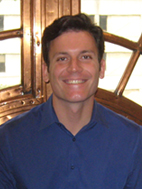 |
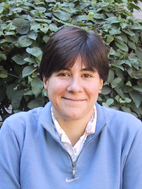
Augusto Buchweitz, Ph.D.Professor at the Pontifical Catholic University (PUCRS), Brazil and researcher at the Brain Institute (InsCer) at PUCRS. He is a former Post-Doctoral Fellow at the CCBI who worked on fMRI studies of bilingual text comprehension, neurosemantics, and multi-tasking.
Selected Publications:
CCBI publications list
Buchweitz, A., Mason, R. A., Tomitch, L. M. B., & Just, M. A. (2009). Brain activation for reading and listening comprehension: An fMRI study of modality effects and individual differences in language comprehension. Psychology & Neuroscience, 2, 111-123.
Buchweitz, A., Mason, R. A., Hasegawa, M., & Just, M. A. (2009). Japanese and English sentence reading comprehension and writing systems: An fMRI study of first and second language effects on brain activation. Bilingualism: Language and Cognition, 12, 141-151. |
| |
 |
Inmaculada Escudero, Ph.D.was a Visiting Scholar from Spain. She is Assistant Professor in the Department of General Psychology at Autónoma University of Madrid. While at the CCBI her interests included text comprehension, causal cognition, and neural correlates of inferencing. Her work focused on using fMRI with the aim of combining behavioral and neuroimaging techniques to further investigate the cognitive and neural bases of inference processes.
Selected Publications:
Escudero, I. & León, J.A. (in press). Discourse comprehension processes between types of texts: A cross-language study based on elaborative inferences generation. Journal of Cross-Cultural Psychology.
León, J.A., Olmos, R., Escudero, I., Cañas, J. & Salmerón, L. (in press). Assessing short summaries with human judgments procedure and latent semantic analysis in narrative and expository texts. Behavior Research Methods. Escudero, I., León, J.A. & van den Broek, P. (2003). Using verbal protocols and lexical decision on the activation of backward and forward inferences: Effects on cultural/language and type of text factors. Proceedings of the Thirteenth Annual Meeting of The Society for Text and Discourse. Madrid, 25-28 June. |
| |
 |
Zohar Eviatar, Ph.D.Dr. Eviatar is a member of the Institute for Information Processing and Decision Making, and of the Psychology Department at the University of Haifa. Her work revolves around brain mechanisms for language, with special emphasis on hemispheric functions in different languages and in special populations.
Selected Publications:
Sapir, S., Maimon, T., & Eviatar, Z. (2002)Linguistic and Nonlinguistic Auditory Processing of Rapid Vowel Formant (F2)Modulations in University Students with and without Developmental Dyslexia. Brain and Cognition, 48(2/3), 520-526.
Ibrahim, R., Eviatar, Z., & Aharon-Peretz, J. (2002) The characteristics of Arabic orthography slows its processing. Neuropsychology 16 (3) 322-326. Eviatar, Z.& Ibrahim, R. (in press). Morphological and Orthographic Effects on Hemispheric Processing of Nonwords: A Cross-Linguistic Comparison, Neuropsychology. |
| |
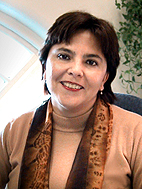 |
Cleotilde (Coty) Gonzalez, Ph.D.Associate Research Professor in the Department of Social and Decision Sciences. Director of the Dynamic Decision Making Laboratory. She earned her Ph. D. from Texas Tech University. Her research goals are: to understand decision-making cognitive processes in complex, real-time, dynamic environments and to help people make better decisions in these situations. Her research is mainly behavioral, using realistic computer simulations. Other methods include computational cognitive modeling, eye tracking, and fMRI. Email
conzalez@andrew.cmu.edu
Investigator's Homepage:
http://www.hss.cmu.edu/departments/sds/ddmlab
Selected Publications:
Gonzalez C., & Wimisberg, J. (2007). Situation awareness in dynamic decision-making: Effects of practice and working memory. Journal of Cognitive Engineering and Decision Making, 1(1), 56-74.
Cronin, M., & Gonzalez C. (2007). Understanding the building blocks of systems dynamics. Systems Dynamics Review, 23(1), 1-17. Gonzalez, C. (2005). Task workload and cognitive abilities in dynamic decision making. Human Factors, 47(1), 92-101. |
| |
 |
Rajesh Kumar Kana, Ph.D.Assistant Professor at the University of Alabama at Birmingham. He is a former CCBI Post-Doctoral Fellow working on fMRI studies of autism. His primary research interest is to explore the neural substrates of social cognition and the impact of social cognition on language, communication and other cognitive functions in autism. He uses functional and structural MRI to study the neural architecture of autism. Email
rkana@uab.edu
Selected Publications:
CCBI publications list
Kana, R.K., Keller, T.A., Minshew, N .J., & Just, M.A. (2007). Inhibitory Control in High Functioning Autism: Decreased Activation and Underconnectivity in Inhibition Networks. Biological Psychiatry, 62, 198-206.
Kana, R.K., Keller, T.A., Cherkassky, V.L., Minshew, N.J., & Just, M.A. (2006). Sentence comprehension in autism: thinking in pictures with decreased functional connectivity. Brain, 129(9), 2484-93. Keller, T.A., Kana, R.K., & Just, M.A. (2007). A developmental study of the structural integrity of white matter in autism. Neuroreport, 18(1), 23-27. |
| |
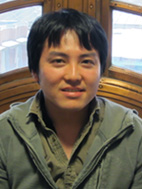 |
Hidetsugu (Hide) Komeda, Ph.D.is a research psychologist in the area of cognitive psychology in autism. His Ph.D. is from Kyoto University, Japan. He is working on fMRI studies of cognitive, perceptual, and social processes in autism. Email
hkomeda@andrew.cmu.edu
Investigator's Homepage:
http://researchmap.jp/komeda
Selected Publications:
Rapp, D.N., Komeda, H., & Hinze, S.R. (2011). Vivifications of literary investigation. The Scientific Study of Literature, 1, 123-135.
Komeda, H., Kawasaki, M., Tsunemi, K., & Kusumi, T. (2009). Differences between estimating protagonists' emotions and evaluating readers' emotions in narrative comprehension. Cognition and Emotion, 23, 135-151. Komeda H, Kusumi T. (2006). The effect of a protagonist's emotional shift on situation model construction. Memory & Cognition, 34, 1548-1556. |
| |
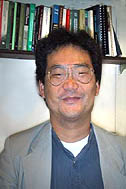 |
Hideya Koshino, Ph.D.Assistant Professor at California State University at San Bernadino. He is a former CCBI Post-Doctoral Fellow working in the area of attention, executive function, spatial information, and autism. He earned his Ph.D. from the University of Kansas. He is continuing his CCBI work using tele-collaboration and summer visits. Email
hkoshino@csusb.edu
Selected Publications:
CCBI publications list
Koshino, H., Carpenter, P. A., Cherkassky, V. L., Keller, T. A., & Just, M. A. (2005). Functional connectivity in an fMRI working memory task in high-functioning autism. NeuroImage, 24, 810-821.
Koshino, H., Carpenter, P. A., Keller, T. A., & Just, M. A. (in press). Interaction between the dorsal and ventral pathways in mental rotation: An fMRI study. Cognitive, Affective, & Behavioral Neuroscience. Koshino, H. (2001). Activation and inhibition of stimulus features in conjunction search. Psychonomic Bulletin & Review, 8 (2), 294-300. Koshino, H., Boese, G.A., & Ferraro, F.R. (2000). The relationship between cognitive abilities and positive and negative priming in identity and spatial tasks. Journal of General Psychology, 127(4), 372-382. |
| |
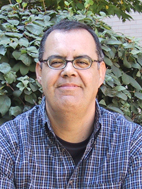 |
Jose A. León, Ph.D.was a Visiting Scholar from Spain. He is a Professor in the Department of Psychology at the Autónoma University of Madrid. Dr. León teaches courses in cognitive mechanisms of Language and Discourse Comprehension, Knowledge Acquisition and Reading Processes in text comprehension. His primary interests are in the cognitive mechanisms underlying language comprehension and discourse, inferences, causality, mental representations and reading. His current research is focused on fMRI studies in processing of backward/forward inferences and causal cognition. Email
joseantonio.leon@uam.es
Selected Publications:
León, J.A., Olmos, R., Escudero, Cañas, J.J. & Salmerón, L. (in press). Assessing Short Summaries With Human Judgments Procedure and Latent Semantic Analysis in narrative and expository texts. Behavioral Research Methods, Instruments, & Computers Journal.
Singer, M., León, J.A., Friese U., & the Behavioral Empirical Group (in press). Behavioural research has achieved a high level of maturity. In Franz Schmalhofer y Charles A. Perfetti (Eds.), Higher level language processes in the brain: Inference and Comprehension processes. Mahwah, N.J.: LEA. Maury, P. Pérez, O. & León, J.A (2002). Predictive inferences in scientific and technological contexts. In J.C. Otero, J.A. León, y A.C Graesser (Eds.), The Psychology of the scientific text (pp. 199-221). Mahwah, New Jersey: Lawrence Erlbaum Associates. |
| |
 |
Yanni Liu, Ph.D.is a former CCBI Post-Doctoral Fellow. She completed her PhD at the University of Michigan, Ann Arbor. Her doctoral research focused on the executive function and decision-making processes of normal people and OCD patients. She is currently using fMRI to investigate the perceptual superiority and executive dysfunction in Autism spectrum disorder. Email
yanniliu@cmu.edu
Selected Publications:
Liu, Y., & Gehring, W. J. (2009). Loss Feedback Negativity Elicited by Single- vs. Conjoined-Feature Stimuli. Neuroreport, 20(6), 632-636.
Liu, Y., Shu. H. & Wei, J.(2006). Spoken word recognition in context: evidence from Chinese ERP analyses. Brain and Language, 96, 37-48. Liu, Y., & Shu, H. (2002). Developmental research on sublexical processing in Chinese character recognition. Chinese Journal of Applied Psychology, 8, 3-7. |
| |
 |
Sharlene Newman, Ph.D.Assistant Professor of Psychology at Indiana University. She earned her Ph.D. at the Biomedical Engineering Department of the University of Alabama at Birmingham and is a former CCBI Post-Doctoral Fellow. Her research interests are in the areas of fMRI of language processes, problem-solving, and planning. Email
sdnewman@indiana.edu
Investigator's Homepage:
http://www.cogs.indiana.edu/people/homepages/newman.html
Selected Publications:
CCBI publications list
Just, M. A., Newman, S. D., Keller, T. A., McElaney, A., & Carpenter, P. A.. (2004) Imagery in sentence comprehension: An fMRI study. NeuroImage.
Newman, S. D., Carpenter, P. A., Varma, S., & Just, M. A. (2003) Frontal and parietal participation in problem-solving in the Tower of London: fMRI and computational modeling of planning and high-level perception. Neuropsychologia, 41(12), 1668-1682. Newman, S. D., Just, M. A., Keller, T. A., Roth, J. & Carpenter, P. A. (2003) The differential effects of syntactic and semantic processing on the two subregions of Broca's area. Cognitive Brain Research, 16, 297-307. Newman, S. D., Just, M. A., & Carpenter, P. A. (2002) The synchronization of the human cortical working memory network. NeuroImage, 15, 810-822. Newman, S. D., Twieg, D., & Carpenter, P. A. (2001) Baseline conditions and subtractive logic in neuroimaging. Human Brain Mapping, 14, 228-235. |
| |
 |
Susana Novais-Santos, Ph.D.is a former CCBI Postdoctoral Fellow. She obtained her first Master's in Computer Science and Engineering at Instituto Superior Técnico, Lisbon, Portugal. Susana then got an MSc in Engineering and Physical Science in Medicine at Imperial College of Science, Technology and Medicine, University of London, UK. She obtained her PhD in Bioengineering (Neuroengineering) at the University of Pennsylvania. Her areas of expertise are language processing, cognition, executive resources, strategic planning and decision-making. Email
snovais@andrew.cmu.edu
|
| |
 |
Francisco Pereirais a research scientist at Siemens Corporate Technology, working on neuro- and medical imaging. Previously he was a Ph.D. candidate in the Computer Science Department at CMU and the Center for the Neural Basis of Cognition, working in collaboration with the Center for Cognitive Brain Imaging. He is interested in the application of machine learning techniques to the analysis of fMRI data and their use in building better cognitive models. He sees this as a stepping stone in the path to the creation of Artificial Intelligence. Francisco has a B.Sc. in Computer Science from the University of Porto, Portugal. Email
fpereira@cs.cmu.edu
Selected Publications:
Mitchell T., Hutchinson R., Just M., Newman S., Niculescu S., Pereira F., Wang X. (2002). Machine Learning of fMRI Virtual Sensors of Cognitive States. Functional Neuroimaging workshop at Neural Information Processing Systems.
Pereira F., Just M. and Mitchell T. (2001). Distinguishing natural language processes on the basis of fMRI-measured brain activation. Proceedings of Principles of Knowledge Discovery in Databases, p.374-385.. Valdes-Perez R., Pericliev V. and Pereira F. (2000). Concise, Intelligible, and Approximate Profiling of Multiple Classes. International Journal of Human Computer Systems, 53(3):411-436. |
| |
 |
Chantel Prat, Ph.D.Assistant Professor at the University of Washington, Seattle, with appointments in Psychology and at the Institute for Learning and Brain Sciences. Chantel is a former member of the CCBI. Her research investigates the nature of biological constraints on information processing, with an emphasis on the neural correlates of individual differences in language comprehension abilities. Her current research employs the combination of fMRI, TMS, DTI, and behavioral paradigms to investigate the neural basis of individual differences in language and cognition. Email
csprat@uw.edu
Selected Publications:
Prat, C. S., Mason, R. A., & Just, M. A. in press. Individual differences in the neural basis of causal inferencing. Brain & Language.
Prat, C. S., & Just, M. A. in press. Exploring the neural dynamics underpinning individual differences in sentence comprehension. Cerebral Cortex. Prat, C. S., & Just, M. A. (2008). Brain bases of individual differences in cognition. Psychological Science Agenda, Volume 22, Issue 5. (Online Newsletter of the American Psychological Association). Long, D. L., & Prat, C. S. (2008). Individual differences in syntactic ambiguity resolution: Readers vary in their use of plausibility information. /Memory and Cognition, 36(2), 375-391. Prat, C., Keller, T. A., & Just, M. A. (2007). Individual differences in sentence comprehension: A functional Magnetic Resonance Imaging investigation of syntactic and lexical processing demands. Journal of Cognitive Neuroscience, 19, 1950-1963. Prat, C. S., Long, D. l., & Baynes, K. (2007). The representation of discourse in the two hemispheres: An individual differences investigation. Brain Language, 100, 283-294. |
| |
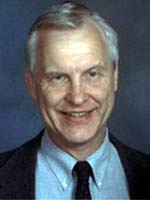 |
Walter Schneider, Ph.D.Professor of Psychology at the University of Pittsburgh and Director of the Center for the Neural Basis of Cognition. Dr. Schneider investigates dynamic cortical processing through human behavioral and brain imaging studies, as well as computer simulation models. Behavioral and brain imaging studies focus on understanding the processes involved in human learning and attention allocation. His research examines cortical areas involved in both learning and sensory processing. The data from these studies is used to detail how rapidly and in what forms attention moves and what are the component structures of learning (goal popping, memory retrieval, feedback processing). His CCBI-related work is on fMRI studies of automaticity in high level cognition, bringing his pioneering expertise in automaticity to apply to cortical function in complex tasks. Email
waltsch@vms.cis.pitt.edu
|
| |
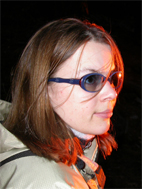 |
Svetlana Shinkareva, Ph.D.Assistant Professor at the University of South Carolina. She is a former CCBI Post-Doctoral Fellow. Dr. Shinkareva's research focuses on the development and application of quantitative methods to neuroimaging data. Her current interests include applying machine learning methods to fMRI data to study the neural basis of semantic knowledge representation. Email
shinkare@gwm.sc.edu
Selected Publications:
Shinkareva, S.V., Mason, R.A., Malave, V.L., Wang, W., Mitchell, T.M., et al (2008). Using fMRI brain activation to identify cognitive states associated with perception of tools and dwellings. PLoS ONE 3(1): e1394.
Shinkareva, S.V., Ombao, H.C., Sutton, B.P., Mohanty, A., & Miller, G.A. (2006). Classification of functional brain images with a spatio-temporal dissimilarity map. NeuroImage, 33, 63-71. |
| |